
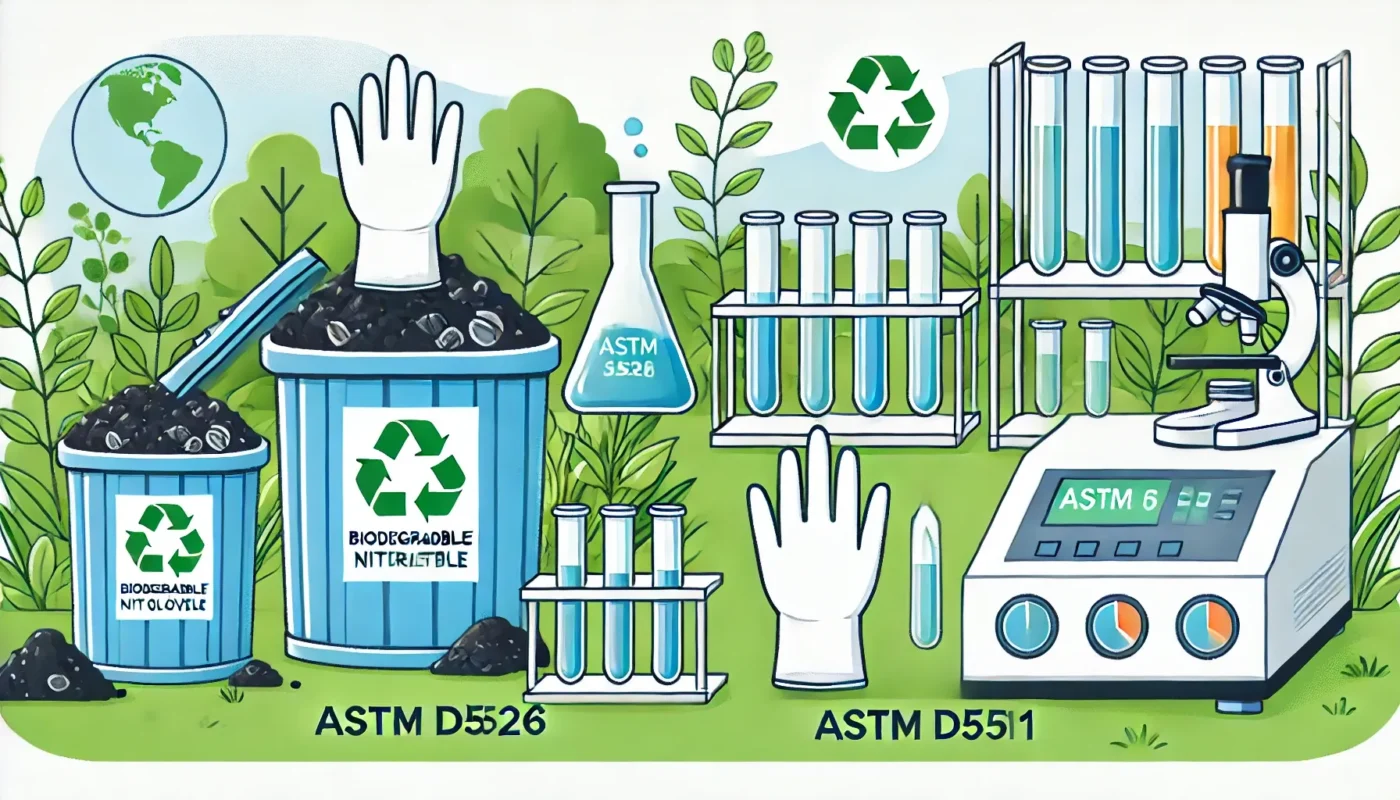
Что такое биоразлагаемый нитрил?
Биоразлагаемый нитрил - это резина, обработанная для более быстрого разложения в природных условиях, таких как свалки. В отличие от необработанных перчаток, которые могут занять более столетия, чтобы разложиться, эти обработанные перчатки значительно быстрее разлагаются.
Понимание методов тестирования
Для оценки эффективности биоразлагаемого нитрила важно знать, как его биоразлагаемость измеряется. Это помогает понять и оценить утверждения конкурентов. Два признанных метода используются: ASTM D5511 и ASTM D5526, оба разработаны Американским обществом по испытательным методам (ASTM International).
ASTM D5526: Полное испытание
Испытание ASTM D5526 предпочтительно из-за своей всесторонности. Оно имитирует условия свалки в реальных условиях на протяжении длительного периода, предоставляя более точную оценку биоразлагаемости перчатки. Этот тест более строг и продолжается до полного разложения перчатки.
ASTM D5511: Быстрое лабораторное испытание
Испытание ASTM D5511 короткое и проводится в идеальных лабораторных условиях. Обычно длится 30 дней, оценивая долгосрочную биоразлагаемость на основе краткосрочных данных. Однако его часто рассматривают как предварительное испытание, пока идет более долгое испытание ASTM D5526, поскольку результаты этого испытания могут не точно отражать реальные сроки разложения.
Сертификация и стандарты безопасности
Перчатки из биоразлагаемого нитрила соответствуют тем же стандартам безопасности и устойчивости, что и необработанные перчатки. Они сертифицированы организациями, такими как FDA, Европейский совет (CE), Underwriters Laboratories (UL) и Cradle to Cradle™ (C2C).
Часто задаваемые вопросы
**What’s the Difference Between ASTM D5526 and ASTM D5511?**
ASTM D5526 and ASTM D5511 are both standards for evaluating the biodegradability of materials, but they differ in their approach and the conditions under which they simulate the degradation process.
**ASTM D5526** focuses on providing a more reliable, long-term assessment of biodegradation. This standard simulates the conditions found in a landfill, offering insights into how materials degrade over extended periods under real-world environmental pressures.
**ASTM D5511**, on the other hand, offers a shorter-term evaluation. It conducts its tests under ideal laboratory conditions, which allows for a quicker assessment of biodegradability. This standard is useful for preliminary evaluations or when a rapid response is required.
**What Does “Break Down” Mean?**
- When a material is said to "break down," it means that it has undergone a process of degradation, typically involving the breakdown of its molecular structure. Specifically, in the context of environmental science, "break down" refers to the release of all carbon gases from the material, leaving no toxic residue behind. This process signifies that the material has been fully decomposed into its constituent elements, which can then be naturally assimilated into the environment. **Additional Testing Methods**.
- **BMP Tests (Biodegradation Measurement Procedures)**: BMP tests are designed to measure a material’s potential for biodegradation. This is typically done by assessing the methane output from anaerobic bacteria, which indicates the material's capacity to undergo biodegradation under anaerobic conditions.
**ASTM E1963**:
ASTM D5526:
This test, referred to as the Standard Test Method for Determining Anaerobic Biodegradation of Plastic Materials Under Accelerated Landfill Conditions, simulates landfill conditions without oxygen. It assesses biodegradability through the percentage decrease in solid material compared to the initial sample after 2.5 years, indicating a 92.6% degradation rate.
ASTM D5511:
The Standard Test Method for Determining Anaerobic Biodegradation of Plastic Materials Under High-Solids Anaerobic-Digestion Conditions, this test operates under optimal laboratory conditions to maximize bacterial activity. ASTM advises against using long-term biodegradability predictions from this test if results from ASTM D5526 are available.
Certifications and Approvals:
- **BMP Tests (Biodegradation Measurement Procedures)**: Verifies material safety for plants.
- When a material is said to "break down," it means that it has undergone a process of degradation, typically involving the breakdown of its molecular structure. Specifically, in the context of environmental science, "break down" refers to the release of all carbon gases from the material, leaving no toxic residue behind. This process signifies that the material has been fully decomposed into its constituent elements, which can then be naturally assimilated into the environment. Evaluates potential methane production during biodegradation.
- CE Certification: Essential for medical devices sold in Europe, ensuring nitrile gloves are appropriate for high-risk settings.
- FDA 510k Approval: Confirma que el dispositivo médico es tan seguro como los productos existentes similares.
- Certificación UL: Garantiza protección contra patógenos de sangre y agentes químicos, biológicos, radiológicos y nucleares.
- Certificación C2C: Certificación voluntaria que asegura que los materiales y procesos son amigables con el medio ambiente.
